Selected Works
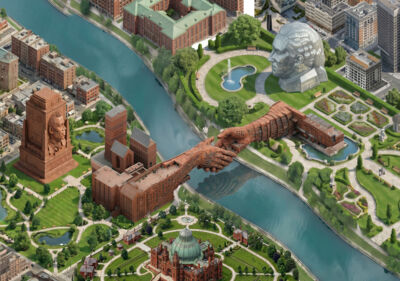
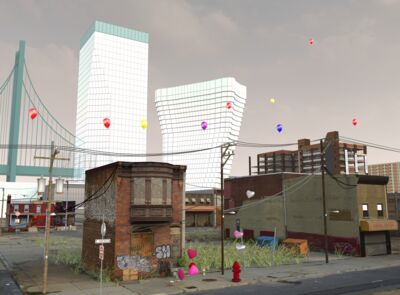
On the 250th anniversary of the founding of America, this work explores what present-day Philadelphia might look like had American slavery been outlawed in the writing of the US Constitution. The installation was sited in the Man Full of Trouble Museum — a restored 18th century tavern housing artifacts from the Revolutionary War era — placing the speculative image in direct dialogue with the material history of the period. Room dimensions: 87" × 144" × 96".
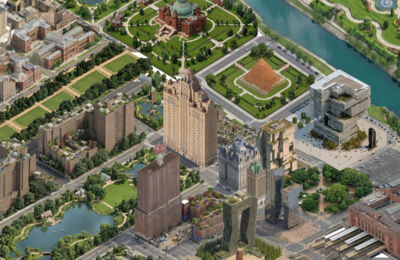
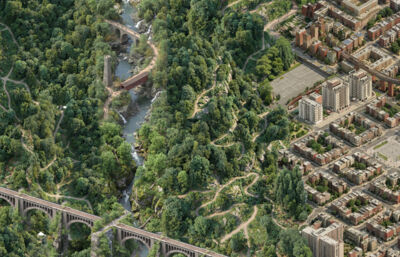
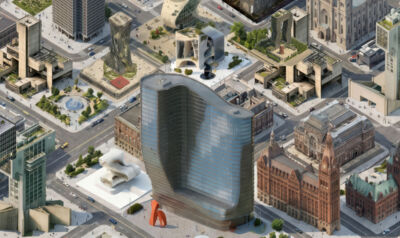
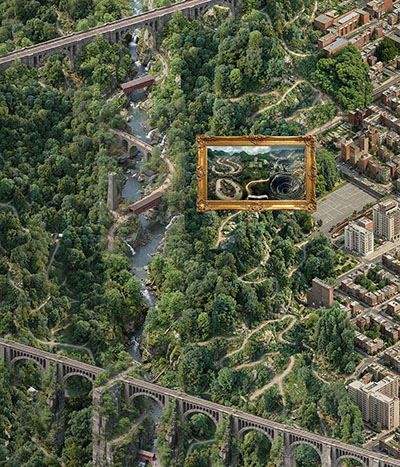
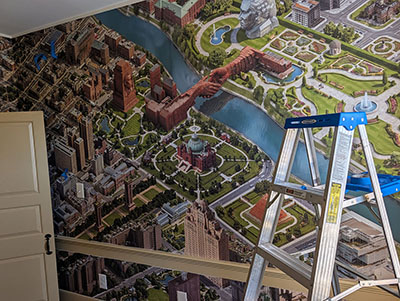
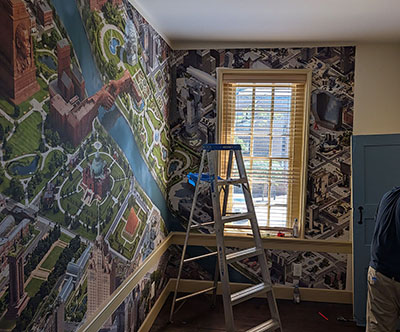
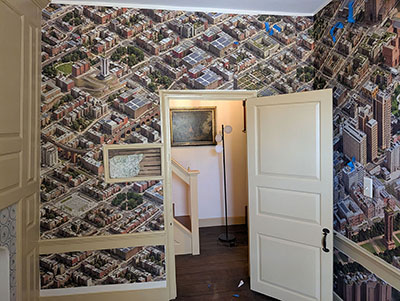
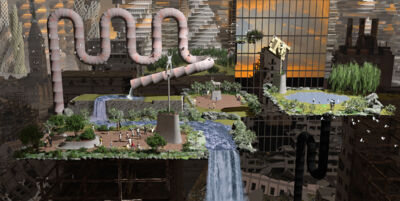
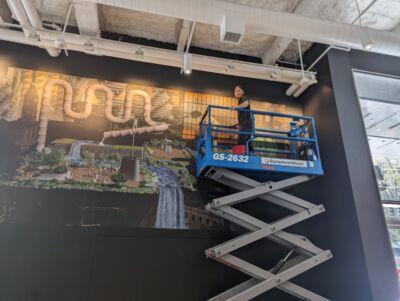
Created for a group exhibition imagining a Philadelphia without guns, this work uses visual effects software to render an alternate urban landscape — a city freed from the architecture of violence. Exhibited at the University Science Center, Philadelphia, 2024.
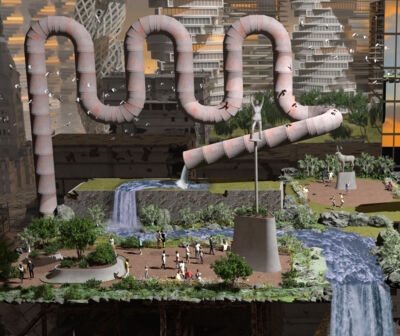
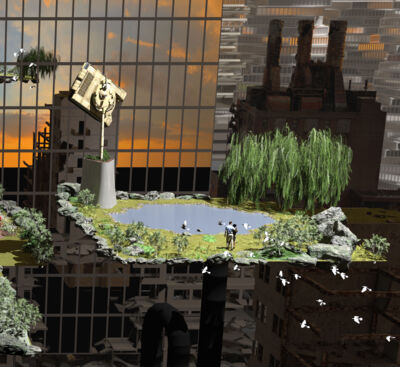
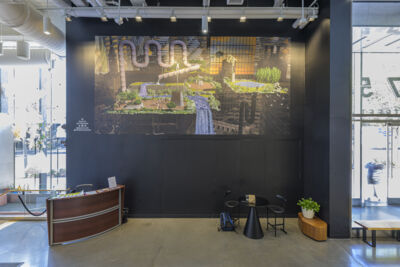
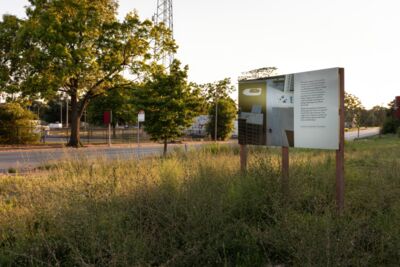
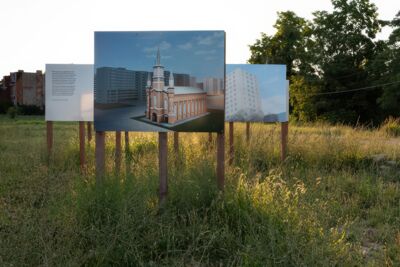
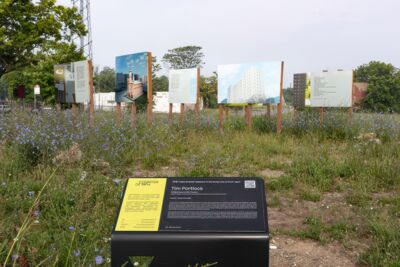
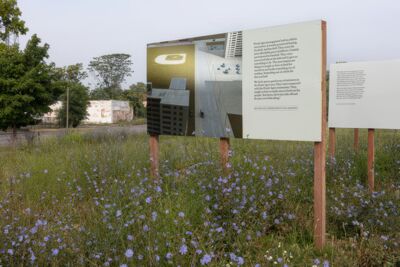
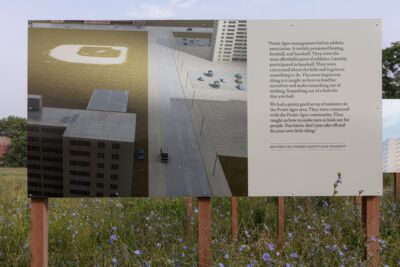
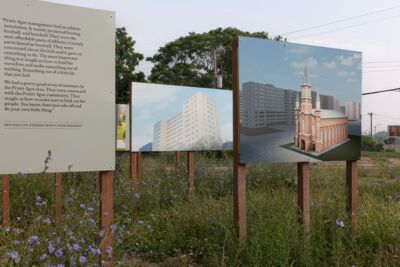
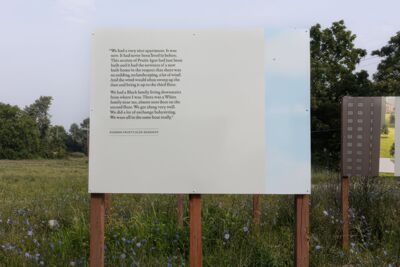
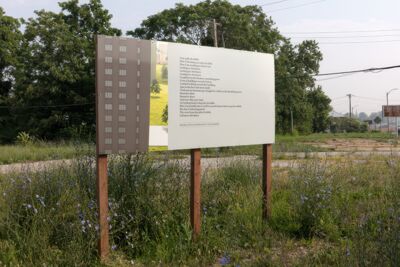
Developed for the 2023 Counterpublic Triennial in St. Louis, this public art project serves as a monument to the former residents of the Pruitt-Igoe housing complex. Using advanced 3D visualization and visual effects software, small-scale billboard artworks were installed directly at the historical demolition site. The imagery is drawn from anecdotes gathered through interviews with former Pruitt-Igoe residents — placing personal narratives in the public sphere and directly challenging the prevailing political and architectural myths that reduce public housing solely to a symbol of failure.
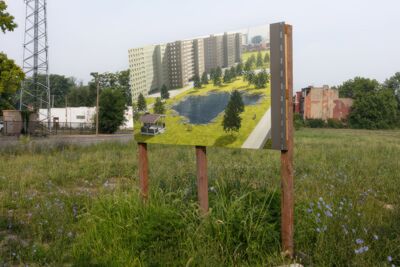
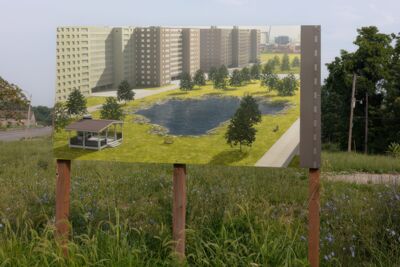
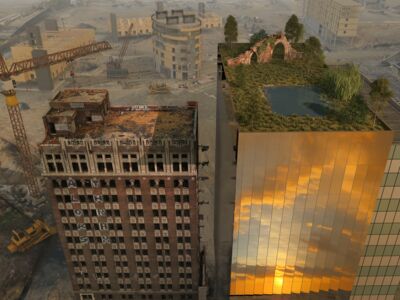
Rendered real estate advertisements collide with the physical reality of disinvestment — luxury language haunting derelict space. The work was exhibited at Locks Gallery, Philadelphia (2021) and the Contemporary Art Museum St. Louis (2020–21).
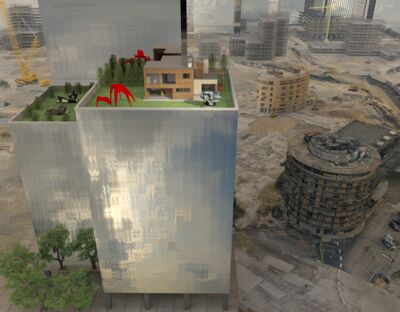
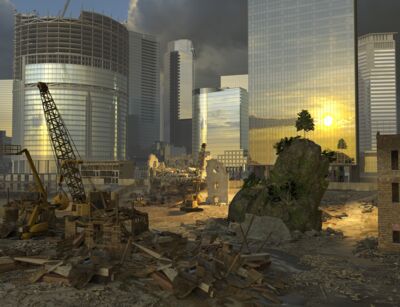
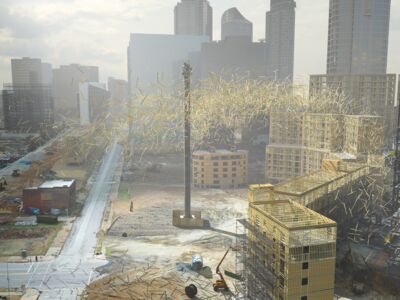
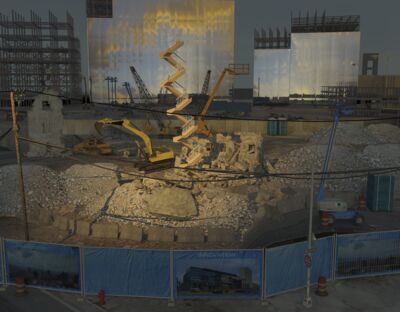
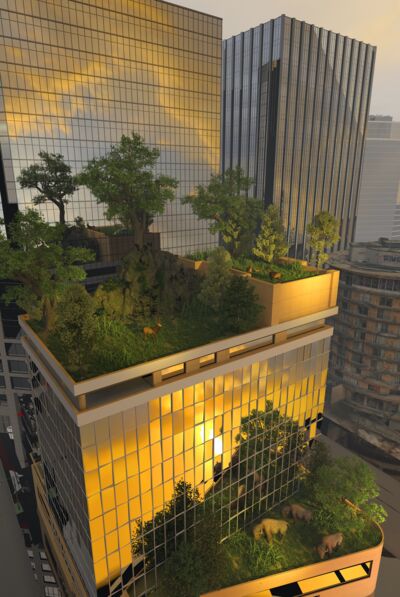
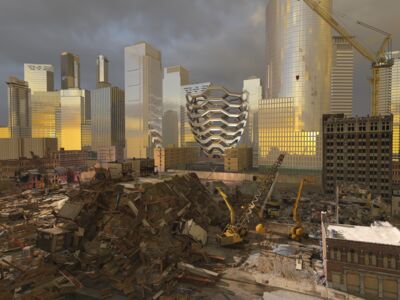
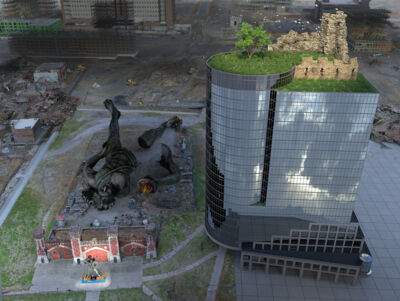
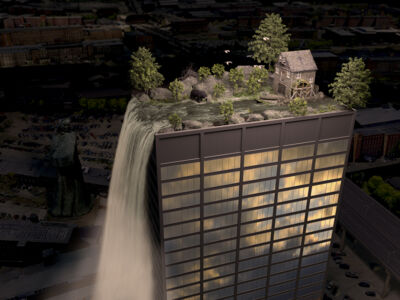
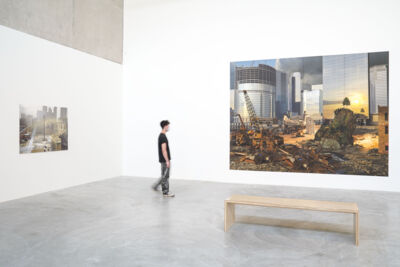
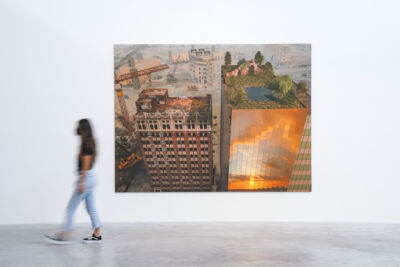
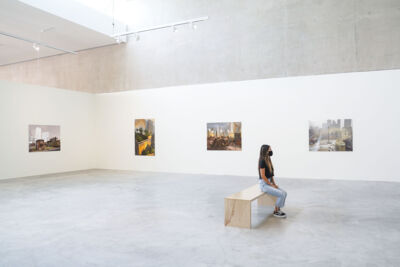
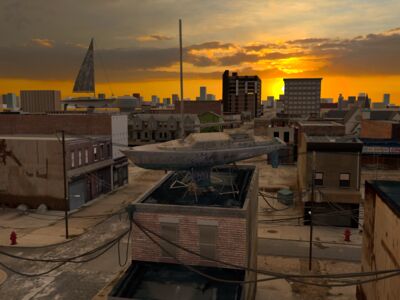
Rendered simulations of Camden, NJ — one of the most economically devastated cities in the United States — rendered with the eerie calm of gaming environments, where ruin becomes spectacle.
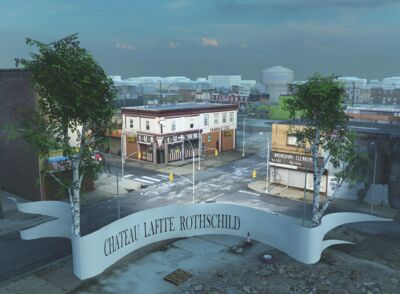
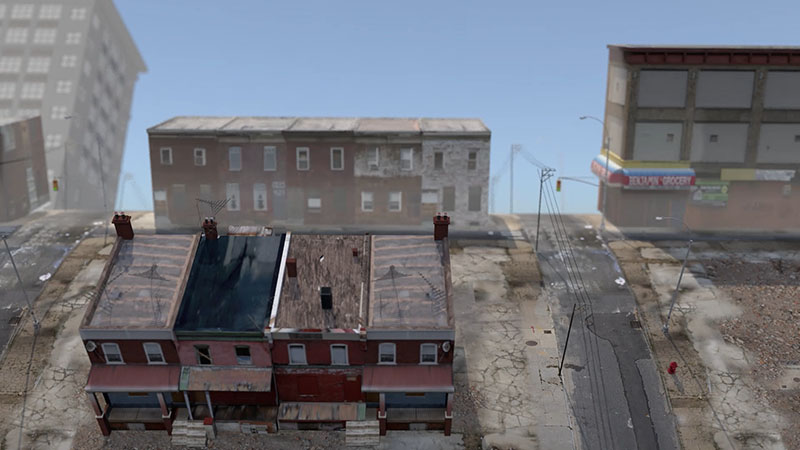
An animated companion to the Camden print series, this single channel video brings the rendered streets of Camden, NJ into motion — the stillness of the still image giving way to something closer to inhabitation. Where the prints fix the viewer outside the scene, the animation draws them through it, making the eerie calm of the gaming environment visceral and durational.
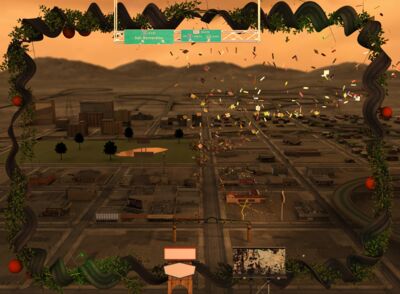
Landscapes generated from video game terrain engines, populated with signs of economic desperation — pawn shops, payday lenders, foreclosure notices — mapped onto sublime natural backdrops.
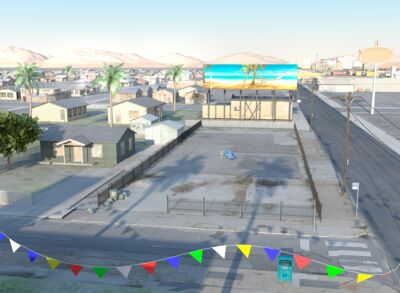
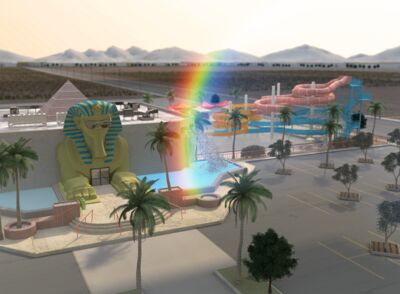
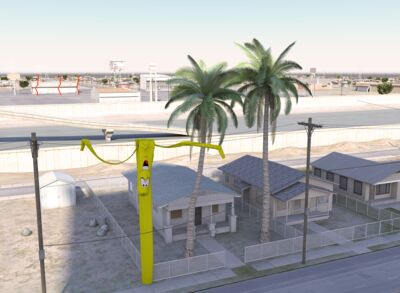
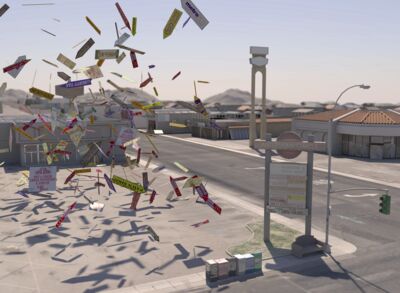
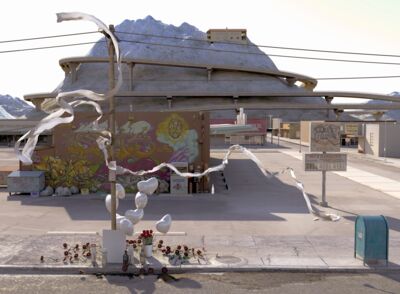
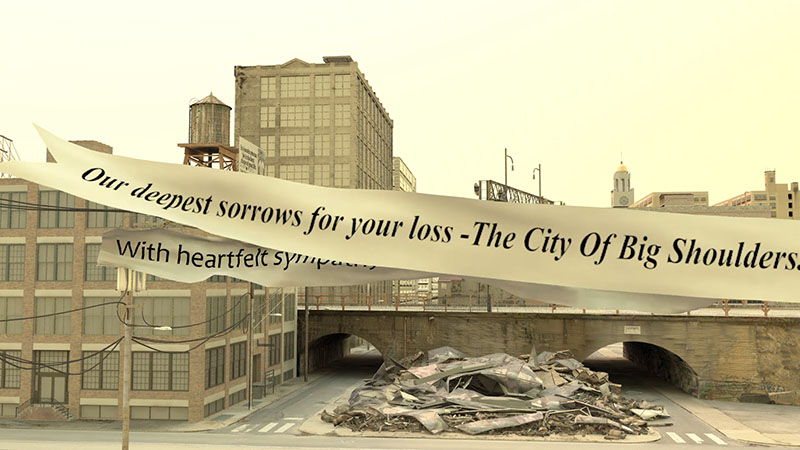
A single channel video projected onto the gallery wall to correspond with the view of 11th Street from the windows of Vox Populi Gallery. The animation moves through the past, present, and near future of the street — some of the buildings depicted drawn from research into forthcoming luxury condominium developments in the neighbourhood. The work collapses time along a single urban corridor, making visible the forces of displacement that are typically invisible until they have already arrived.
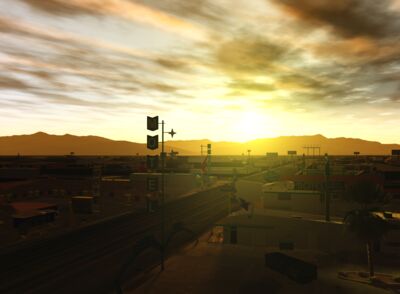
Landscapes from default video game environments — stock terrains shipped with game engines, never intended to be "somewhere" — examined as a new American sublime: placeless, optimised, infinite.
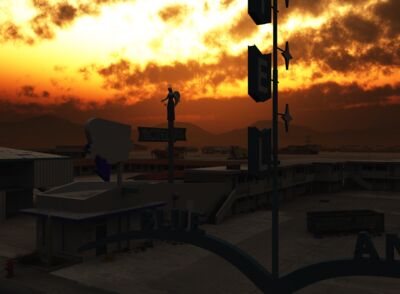
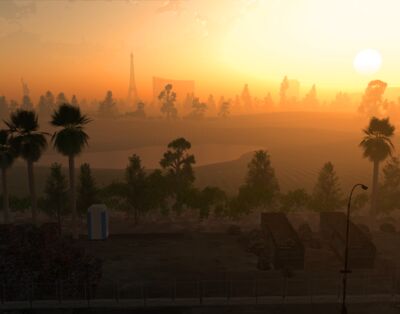
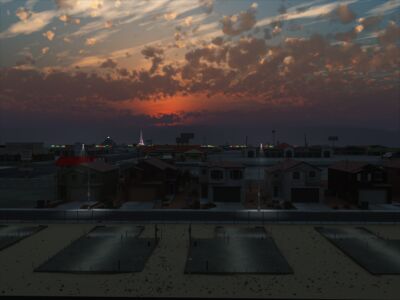
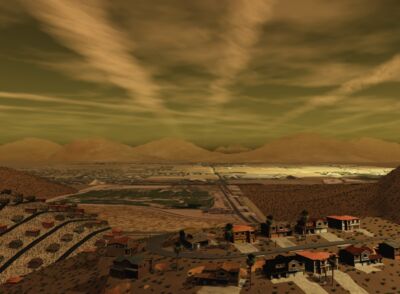
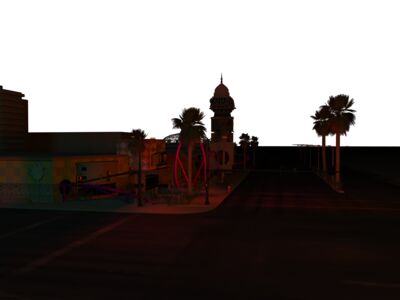
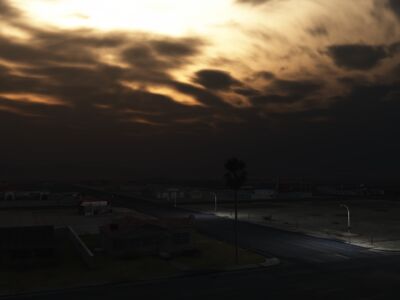
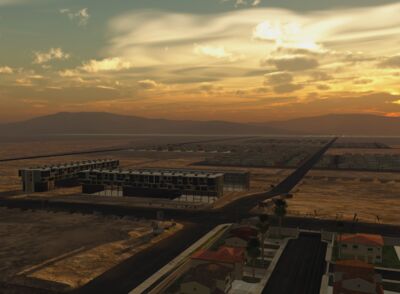
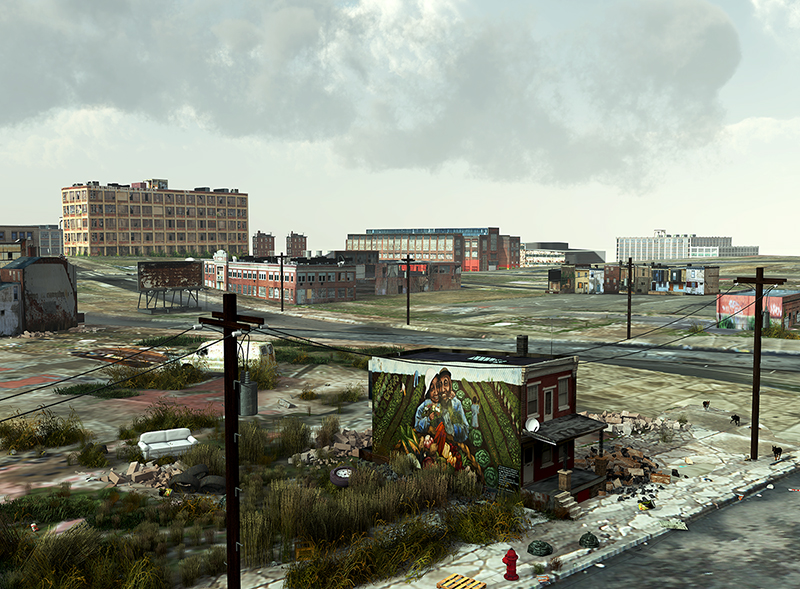
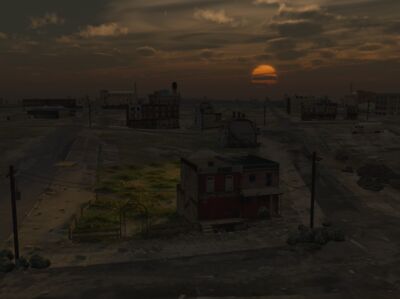
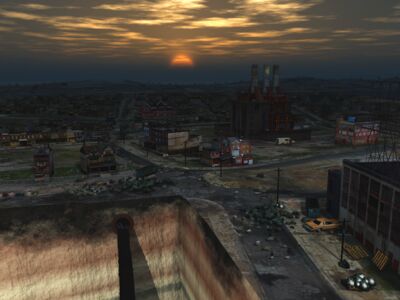
Based on the 40,000 empty and abandoned buildings of Philadelphia circa 2007–2008, the Here series presents these spaces using the visual conventions of 19th century American landscape painting — a pictorial vocabulary historically employed to articulate ideas about American identity. By applying this tradition to sites of urban abandonment and disinvestment, the work asks what the landscape genre reveals when its subject is not wilderness or frontier but the foreclosed city.
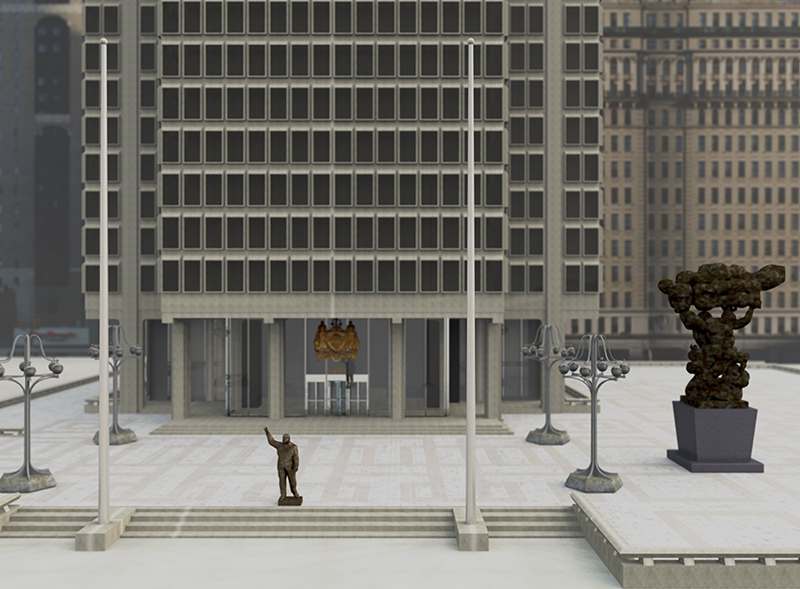
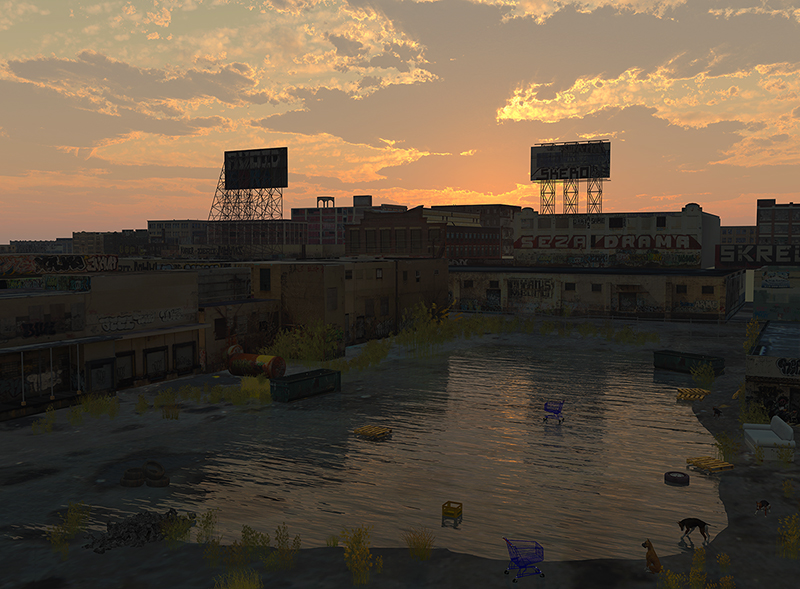
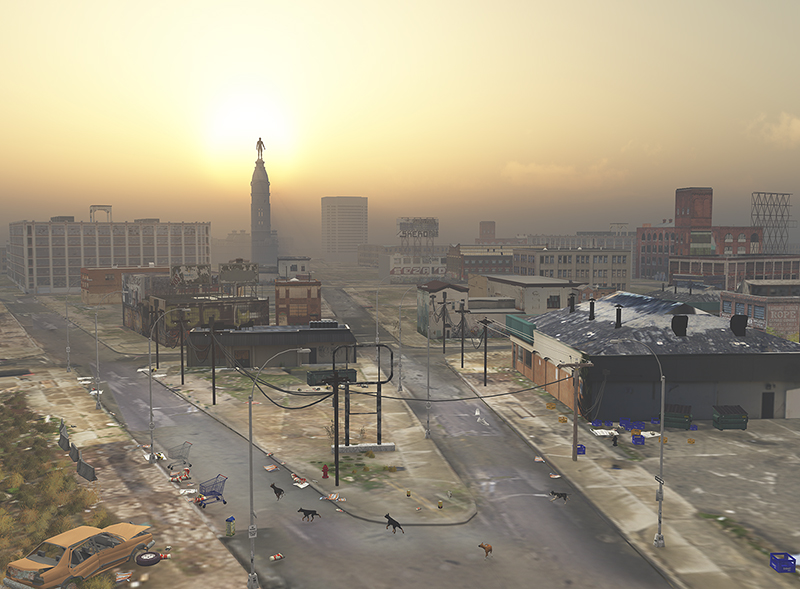
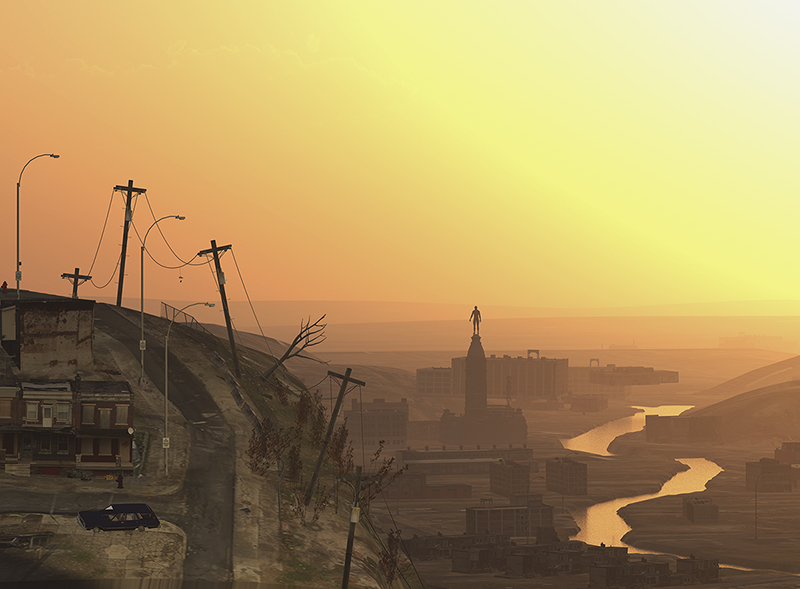
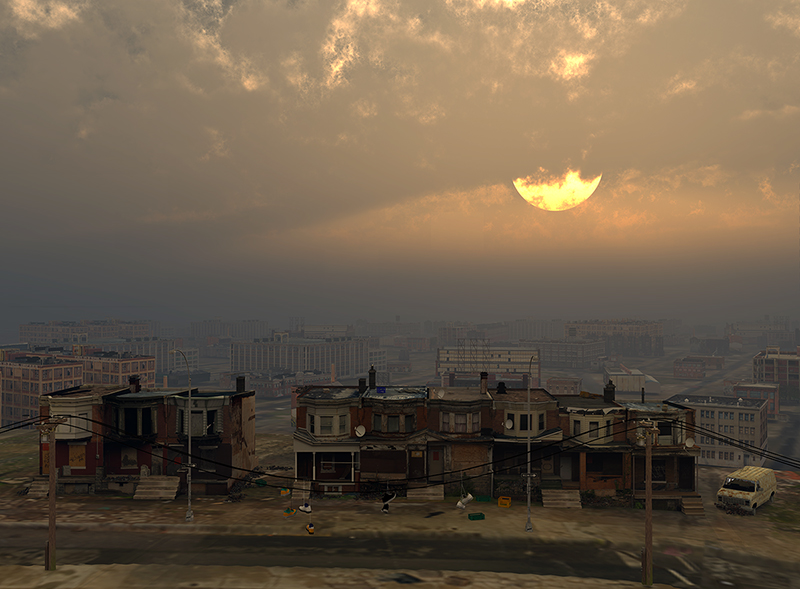
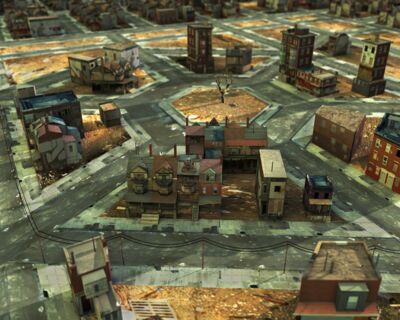
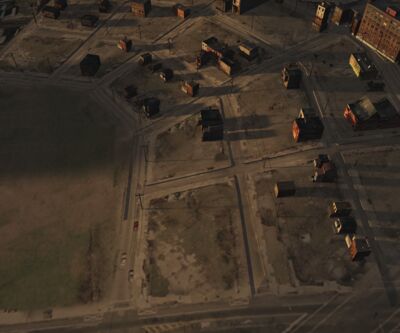
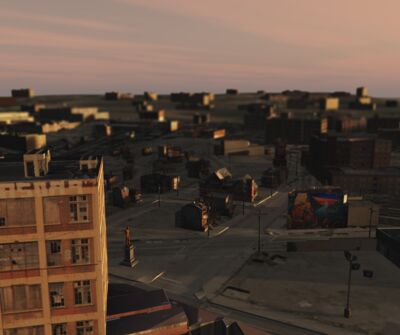
Early large-scale prints rendered from 3D game environments modeled after abandoned and foreclosed neighborhoods in Philadelphia — the foundational body of work establishing Portlock's practice.
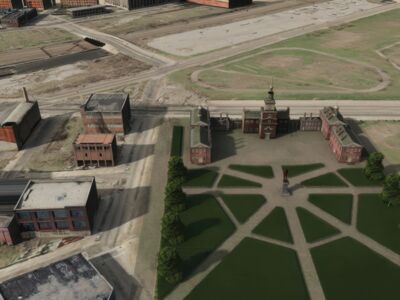
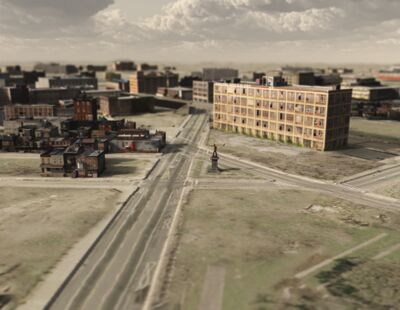
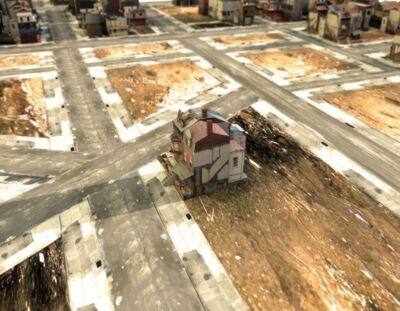
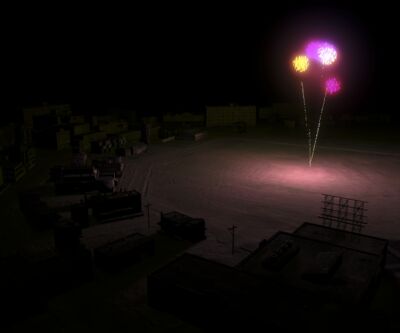
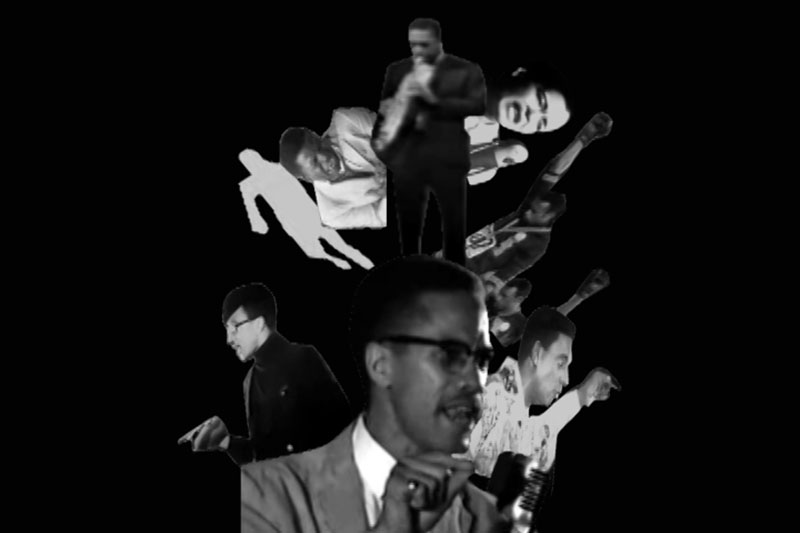
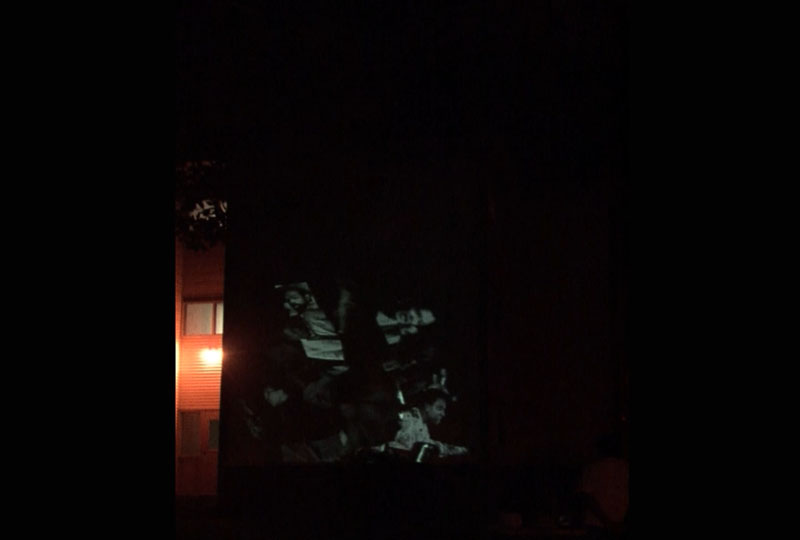
A critical homage to murals created during the Black Arts Movement that have since been destroyed, painted over, or otherwise lost — projected on the exterior of a three-story building in North Minneapolis, at the site of one of the city's largest 1960s riots, on the night of the first Obama/McCain debate.